
Social Entrepreneur Education Program (SEED)
The power of youth, energizing Japan
The SEED Program provides education in social entrepreneurship — covering business development, cross-cultural communication and the SDGs. The curriculum combines online classes and a study tour, and throughout the program students propose business plans focused on social entrepreneurship.
Online Lectures
A specialized curriculum covering social entrepreneurship, business development, cross-cultural communication and the SDGs. Students conduct research and craft business proposals that address the social and economic challenges of Japan’s regional industries.
Study Tour
An immersive opportunity to visit embassies, international organizations, universities and companies. Through dialogue with local business owners and community leaders, proposals evolve into more concrete, insight-driven ideas.
Business Proposals
Each team combines design thinking and entrepreneurship to deliver innovative proposals for real social and economic challenges, aiming to strengthen the global presence of Japan’s regional industries.
What is Social Entrepreneurship?
In short, social entrepreneurship means doing business for a social purpose.
Social entrepreneurs combine commercial activity with social causes, improving the lives of the people connected to that purpose. They usually measure success not by profit alone, but by whether they have changed the world for the better.
Engaging deeply with the target community and understanding its needs is the key to creating innovative solutions — solutions designed around the constraints and opportunities of that community and country, taking into account market demand, finances and resources.
Gallery
Mission Reports
You can explore the details of past SEED Program activities in the reports below.
2026 Theme & Teams
SEED 2026 is the program’s first Winter Edition. Starting in 2026 the SEED Program runs in two annual editions — Summer and Winter — and this year GOROM Association holds the Winter Edition only. The cohort continues to focus on revitalizing the local culture and economy of Yamanashi Prefecture, Japan, supporting traditional local businesses through multicultural teamwork.
This year 28 students from the United States, Colombia, Brazil and Argentina — across six partner universities — work in four multicultural teams, supported by six professors and interns from Japan and South Korea. The online phase runs from July to November 2026, followed by a two-week Study Tour to Tokyo and Yamanashi from November 29 to December 12, 2026.
Online Sessions
10 online sessions: Design Thinking and entrepreneurship workshops, market research, and direct communication with Japanese producers.
Study Tour to Japan
One week in Tokyo and one week in Yamanashi: final presentations to producers and authorities, plus embassy and organization visits.
The Four Teams




2025 Theme & Participants
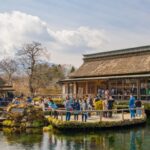
The 2025 SEED Program focused on revitalizing the regional culture and economy of Yamanashi Prefecture, Japan. Yamanashi is home to the world-famous Mount Fuji and a rich cultural heritage, yet many of its towns face population decline and limited international recognition.
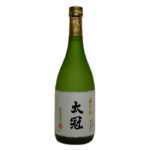
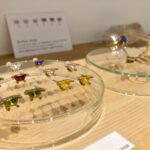
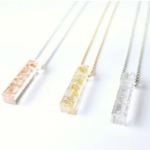
Through multicultural collaboration, the program supported local producers and focused on traditional industries such as sake, wine, tourism and jewelry. Over a six-month hybrid format, a total of 38 students from Colombia, Brazil, Argentina, Japan and — for the first time — the United States worked in multinational teams applying design thinking and entrepreneurship.



2024 Theme & Participants
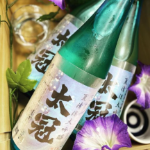
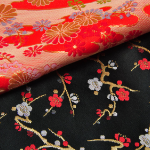
The 2024 SEED Program likewise aimed to revitalize the regional culture and economy of Yamanashi Prefecture. Rich in tourism resources yet still little known abroad, Yamanashi — with its thriving traditional crafts and local industries — is an ideal home for the SEED Program. In 2024 the focus continued on traditional industries such as wine, sake, jewelry and textiles.

2023 Theme & Participants
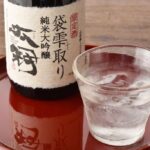
The 2023 SEED Program was carried out under the theme of revitalizing the regional culture and economy of rural Japan, centered on Yamanashi Prefecture. Four themes rich in premium products and tourist destinations were chosen: sake, wine, jewelry and textiles.


Voices from 2022 Participants

It was a wonderful and rewarding experience. Despite the geographic distance, I’m glad to have helped strengthen ties between countries with such great potential to work together.Daniela MontoyaWine Team · EAFIT University (Colombia)

Because every student has a different background, nationality and way of working, the online meetings had their challenges — but the time we spent together created a strong bond.Gabriel LehwingGastronomy Team · ESPM University (Brazil)

If I had joined this program earlier, my interest in Latin America would have been sparked sooner too. Becoming friends with students from Latin America was a truly valuable experience.Suzuka MoritaJewelry Team · Sophia University (Japan)

I wanted to gain an international perspective on business and organizations. In that sense, the SEED Program was the most impactful experience I have ever had.Matías AgudoSake Team · Austral University (Argentina)
Partner University Advisors

EAFIT University (Colombia)

ESPM (Brazil)

Austral University (Argentina)

Universidad de los Andes (Colombia)

FAAP (Brazil)

FAAP (Brazil)

Austral University (Argentina)

Universidad de los Andes (Colombia)

ESPM (Brazil)

Universidad del Rosario (Colombia)


